


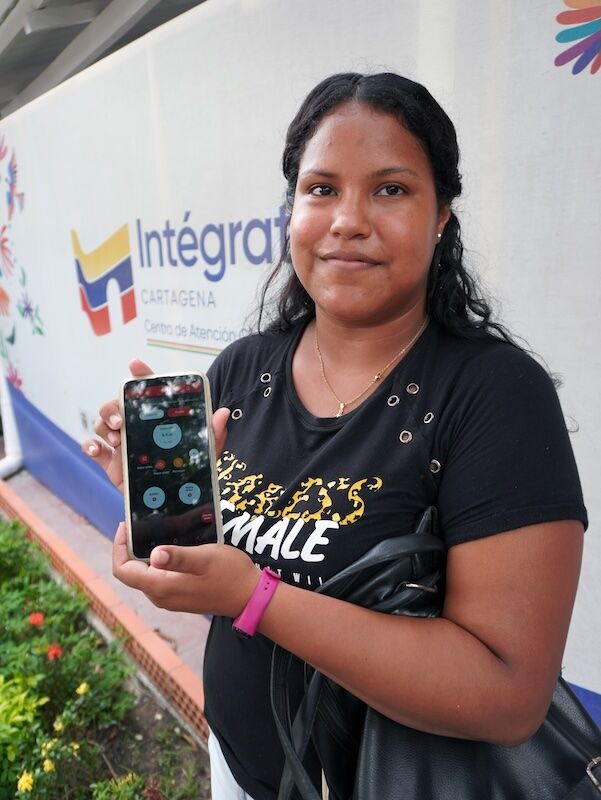
Andreina Guillén is a Venezuelan migrant who moved to Colombia in search of better opportunities. Determined to build a future for herself, she began selling homemade food to finance her studies. Like many migrants, Andreina faced challenges in managing her income and serving customers who often lacked cash for payments.
Her life changed when the World Food Programme (WFP), with support from the Better Than Cash Alliance, launched a groundbreaking pilot to digitize humanitarian payments in Colombia. This initiative introduced the use of a popular mobile wallet application, enabling Venezuelan migrants to receive assistance and conduct transactions digitally.
Thanks to her new mobile wallet, Andreina can now accept payments seamlessly, even from customers without cash. This innovation has not only simplified her business operations but also strengthened her entrepreneurial journey. She can better organize her family budget, increase her product stock, and plan expenses over time without the pressure of immediate cash use.
The impact of the WFP pilot has been profound. Between June 2023 and January 2024, 1,803 families benefited from this digital transfer system, with a goal of reaching 2,500 families across eight municipalities. Remarkably, 85.63% of recipients were women, highlighting the program’s role in promoting gender equity. For women like Andreina, the mobile wallet has improved access to resources and services, fostered economic independence, and contributed to a more balanced distribution of household responsibilities.
With 94% of participants planning to continue using mobile wallets after the assistance ends, this initiative demonstrates how digital financial tools can transform lives, empower entrepreneurship, and promote resilience among migrant communities. Andreina’s story is a testament to how technology and humanitarian innovation can open doors to independence and opportunity.