


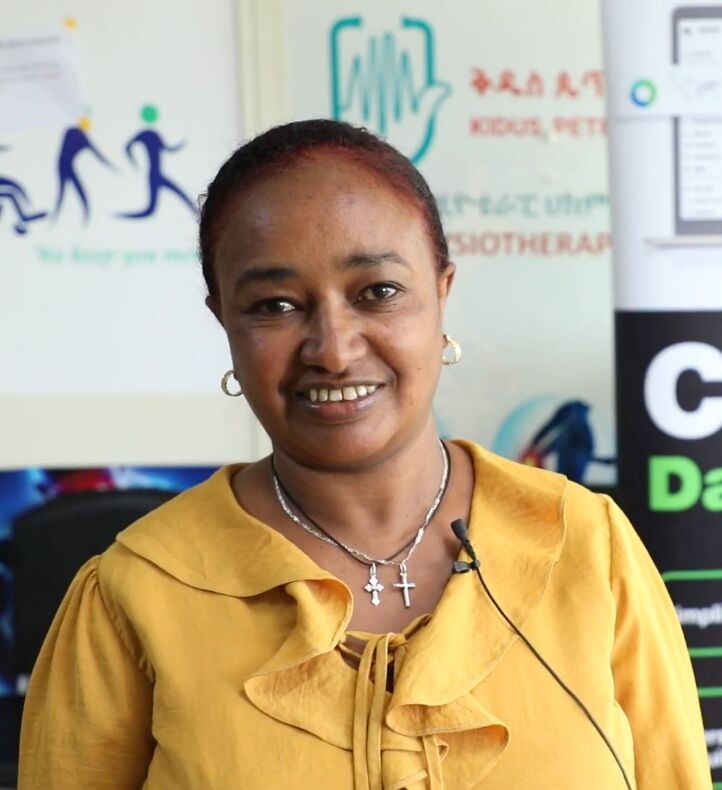
As Head of the Cashiers Department at St. Peter Specialized Hospital (Kidus Petros Hospital) in Addis Ababa, Genet Memberu has spent years at the frontline of patient care, witnessing firsthand how payment systems affect people at some of their most vulnerable moments.
Before the introduction of digital payments, all transactions at the hospital were handled manually. Cashiers issued handwritten receipts, counted cash, and transferred money by hand to the hospital’s main account. Patients often waited in long lines just to pay before they could receive care.
“Before we started digital payments, everything was done using hard copy. A receipt was cut, then written, then the money was counted and transferred by hand to the hospital’s main account. The process was long and stressful, for both patients and for us as staff.”
The shift to digital payments fundamentally changed the hospital’s daily operations. Payments now go directly into the hospital’s main account, eliminating paperwork, cash handling, and manual transfers. For Genet and her team, this has made work safer, lighter, and more efficient.
“Now it goes directly to the hospital account. There is no cutting of receipts, no paperwork, no handling of cash. Our only interaction is through digital payments. It has made the work very easy and very efficient, both for the hospital and for us.”
To support the transition, cashiers received training on digital payment systems, card payments, and working with different banks. This helped build confidence and improve efficiency across the department, which now includes 23 cashiers using the digital system daily.
“Our knowledge of digital payments has increased. The training was very good. It has helped us use technology, and it has made our work more efficient. We are now more confident and more aware of our work.”
The biggest impact of digital payments is felt by patients.
“Patients can pay quickly and move straight to the laboratory or treatment area without waiting. Since many patients are already unwell, avoiding delays really matters. This has been especially helpful for mothers, who can come, make their payment, receive care, and leave smoothly. Whether they use TeleBirr, CBE Birr, or pay through an agent, they are served promptly and leave feeling satisfied.”
Even when some patients have limited access to digital tools, the cashier team ensures that no one is left behind, bringing patience, empathy, and urgency to every interaction, particularly in emergencies.
For Genet, the value of digital payments goes beyond efficiency or technology.
“For me, digital payments are not just about technology. They are about respect. Respect for patients who are in pain. Respect for mothers who need quick care for their children. And respect for staff, who can now work in a safer and more organized environment. It means faster care, less stress, and more dignity for everyone who comes to St. Peter’s Hospital.”